TEN-T and FENIX: Trans-European Networks and Data Exchange
December 7, 2022
Reading time: 9 minutes
Updated on
June 7, 2026
The TEN-T comprises nine trans-European logistics corridors designed by European Commission experts with the aim of promoting a more fluid single European market. FENIX operates the IT component of this project and provides a technical platform for information exchange in line with EU Regulation 2020/1517 (eFTI). Eleven pilot sites were operated between April 2019 and March 2022 in nine countries. The range of initiatives tested remains broad and developments are continuing in 2025.
TEN-T: Strategic Framework and Main Objectives
The TEN-T aims to converge infrastructure and digital solutions to remove bottlenecks. This network strengthens territorial cohesion and accelerates the integration of member countries. Deployment will take place in two major phases: the Core network by 2030 and the Comprehensive network by 2050.
In 2025, the TEN-T actively coordinated with other major European projects. In particular, it aligns with the ERTMS and the Motorways of the Sea. A comprehensive summary is available on the European Commission’s official website.
Interactive Mapping and Current Implementations
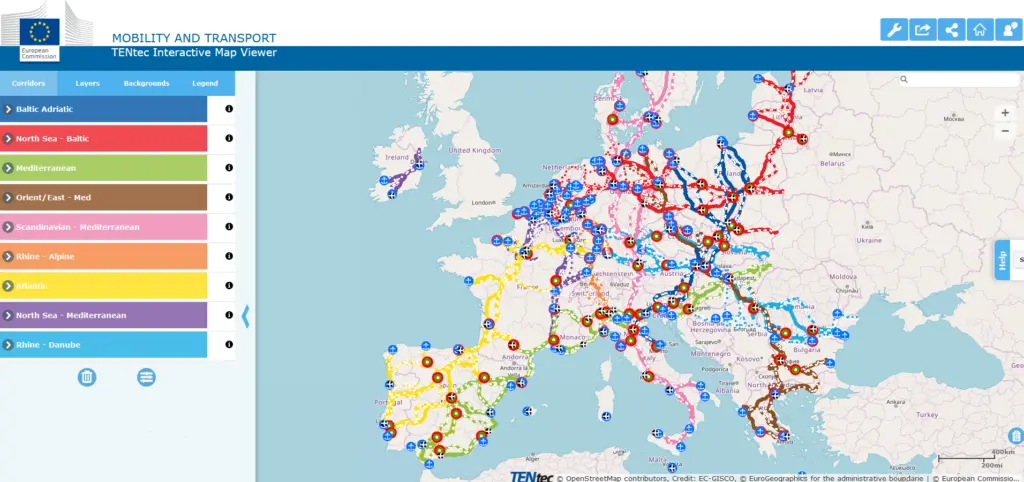
An interactive map allows users to view the basic corridors and their connection points. Users can overlay associated infrastructure, including multimodal hubs and charging stations. Indicators of compliance with projects such as AFIF are also available. The corridors form a dense network around major trans-European routes, facilitating trade and mobility.
Source: European Commission "TENtext interactive Map Viewer"
Constituent Elements of the TEN-T Network
The TEN-T network comprises several key components:
- Main networks: road and rail, air, and waterways
- Combined networks: rail-road and waterway for intermodality
- Key infrastructure: modernized inland ports, airports, and waterways
- Management networks: optimized inland maritime traffic, airspace, and air navigation
These elements work together to create an integrated and efficient European transport system.
FENIX: A Federated Alliance for Data Exchange
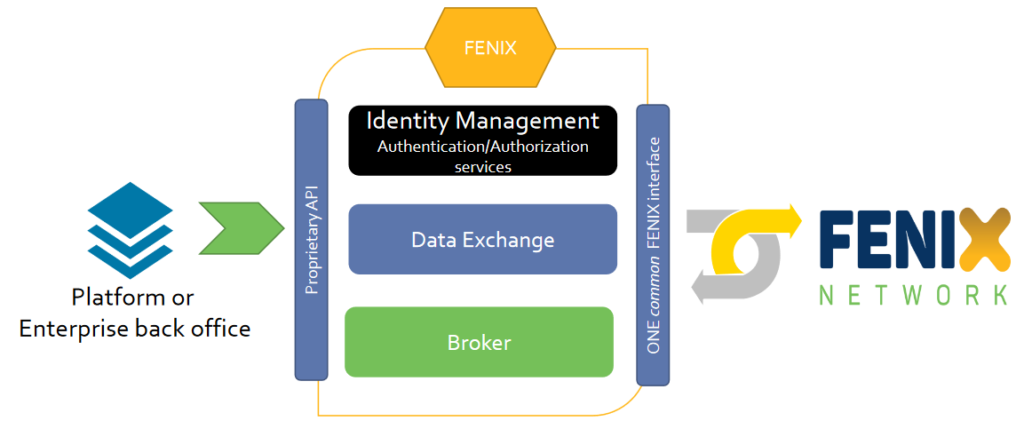
FENIX represents an innovative alliance aimed at converging data flows and services. The system is built around a shared, secure software framework. The federation remains decentralized: each player retains its own software and ERP system. Interconnection is achieved via the specially designed FENIX connector.
Three key functions will address operational needs in 2026:
• Identity Management (IDM) for secure authentication
• Data exchange (DXC) for the transfer of information
• Brokerage services for coordinating exchanges
The message transmitted is not modified during transit. The connector ensures secure transport, while the original platform remains responsible for interpreting the content.
Federated governance defines the terms of membership and technical aspects of FENIX connectors. In particular, it oversees the implementation of connectors and links with certification authorities and bodies. ERTICO acts as the main orchestrator of the system. GS1 Germany participates actively via EDI systems.
The current framework promotes interoperability through standards. Communication takes place between connectors rather than between client platforms, thereby ensuring greater scalability and security.
Design Principles and Examples of Interoperability
The fundamental principles of FENIX are based on three pillars: • Decentralization to preserve autonomy • A secure data-sharing ecosystem • Data sovereignty for each participant
A concrete example illustrates the mechanism: Terminal A requests Terminal B's catalog and specific items. These items include the name, Lloyd's code, ETA, and port of call. The owner of B can then grant access to the desired information via the broker. The content is only disclosed to authorized parties, according to pre-established and standard conditions.
Project Progress and Key References
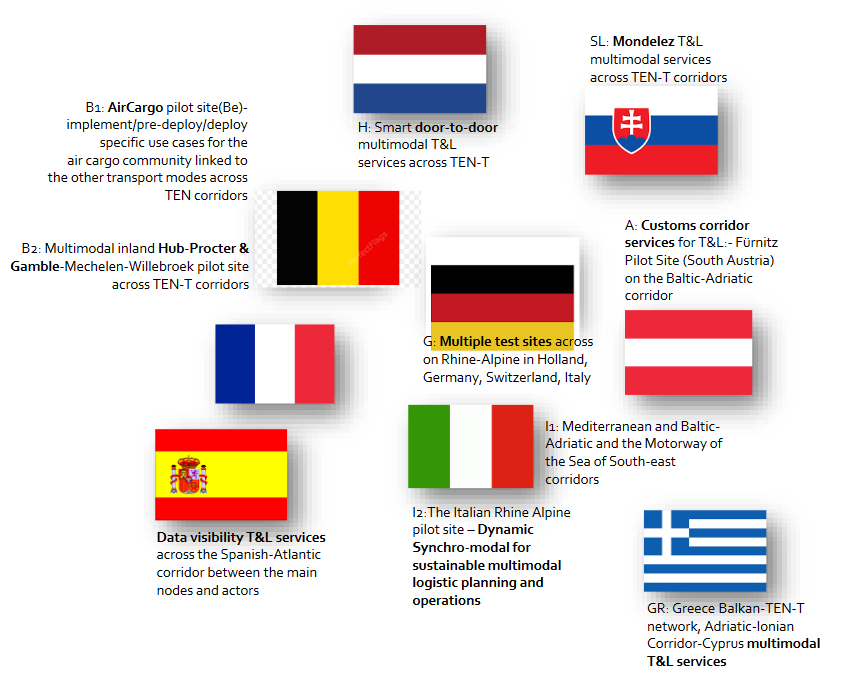
The FENIX federation is characterized by a structured framework and systematic deliverables. The project has 11 pilot sites in 9 European countries. It involves 43 partners with a total investment of €60.6 million under the EIC.
Deliverables D2.1.1 and D6.2.2 provide valuable details on pilots and use cases. They also establish links with EFTI. Additional documents and studies are available via FENIX and ERTICO sources for further technical information.
TEN-T, FENIX, and the digitization of logistics documents: a key challenge for interoperability
The Trans-European Transport Network (TEN-T) and the FENIX project aim to improve the interoperability of logistics systems across Europe. The goal is to streamline data exchange between the various stakeholders in the transportation sector in order to optimize flows and reduce operational friction.
However, this interoperability depends directly on the quality of the data used. Today, a large portion of logistics documents (CMRs, delivery notes, invoices) remain non-standardized, which hinders automation and complicates data exchange between systems.
In this context, the digitization and organization of logistics documents are becoming essential.
Docloop addresses this challenge head-on by automating the extraction and transformation of documents into structured, reliable data that can be directly utilized by business systems (TMS, ERP, WMS). This approach not only reduces manual tasks but also ensures that the data is compatible with interoperability standards promoted by initiatives such as FENIX.
In this sense, Docloop serves as a practical tool for companies seeking to contribute to the TEN-T initiative: a more connected, more efficient, and fully digitized European logistics system.
Outlook and Recent Developments Regarding TEN-T and FENIX
By 2025–2026, initiatives related to the TEN-T network and the FENIX project will enter a more operational phase. The work of the Digital Transport and Logistics Forum (DTLF), particularly within Subgroup II, continues to refine interoperability standards and data exchange frameworks at the European level.
Feedback from the FENIX pilot projects plays a key role in this process. It helps identify persistent obstacles—particularly regarding data standardization and systems integration—and also validates concrete use cases for more connected logistics.
At the same time, several European events and working groups are accelerating the development of this ecosystem, with a particular focus on the implementation of the eFTI (electronic Freight Transport Information) regulation, which aims to make the exchange of electronic data standard practice in the transport sector.
Complementary projects such as AEOLIX and SELIS are part of this ongoing effort, helping to improve visibility into logistics flows, reduce emissions, and strengthen collaboration among logistics stakeholders. This convergence of initiatives confirms a fundamental trend: the digital transformation of transportation now hinges on data.
Toward Truly Operational Interoperability
Recent developments confirm that the challenge is no longer simply a matter of connecting platforms to one another, but rather of ensuring the quality, reliability, and proper structuring of the data exchanged.
In this context, companies must adapt to increasing compliance requirements—particularly those related to eFTI—while optimizing their internal processes. The ability to generate actionable data from the moment it is created is becoming a key factor in competitiveness.
The various deliverables, technical reports, and experiments conducted at the European level demonstrate significant progress, but also highlight a critical issue: without effective management of document flows upstream, interoperability remains limited.
That is why the digitization and automation of logistics documents are emerging as a strategic driver. By structuring data as soon as it enters information systems, companies can not only meet regulatory requirements but also fully integrate into future European logistics networks.
FAQs
Q.
What exactly is TEN-T?
The TEN-T (Trans-European Transport Network) is a trans-European transport network comprising nine strategic logistics corridors, designed to facilitate trade and mobility within the European Union.
Q.
How does FENIX complement the TEN-T?
FENIX brings the digital dimension to TEN-T by creating a secure and standardized data exchange infrastructure, enabling interoperability between different logistics players.
Q.
What are the concrete benefits for businesses?
Companies benefit from greater visibility into their supply chains, simplified and secure data exchange, and reduced administrative costs through standardization.
Q.
What is the deployment schedule?
The TEN-T Core Network must be completed by 2030, while the Comprehensive Network is scheduled for completion by 2050. FENIX will continue its gradual rollout in 2025 with new pilot sites.

_11zon.webp)